

Upgrading your suspension can completely change the way your car looks, feels and drives. But before you spend the money, one of the biggest questions is whether coilovers or air ride is the better choice.
Both can lower your car and improve its stance. Both can transform how it feels on the road. But they are built around different priorities, and choosing the right one comes down to how you actually use the car.
If you want sharper handling, a simpler setup and a more traditional performance-focused feel, coilovers are often the better fit. If you want flexibility, everyday practicality and the ability to go low without constantly worrying about road conditions, air ride may make more sense.
The key is understanding the trade-offs properly rather than choosing based on looks alone.
What’s The Difference Between Coilovers an Air Ride
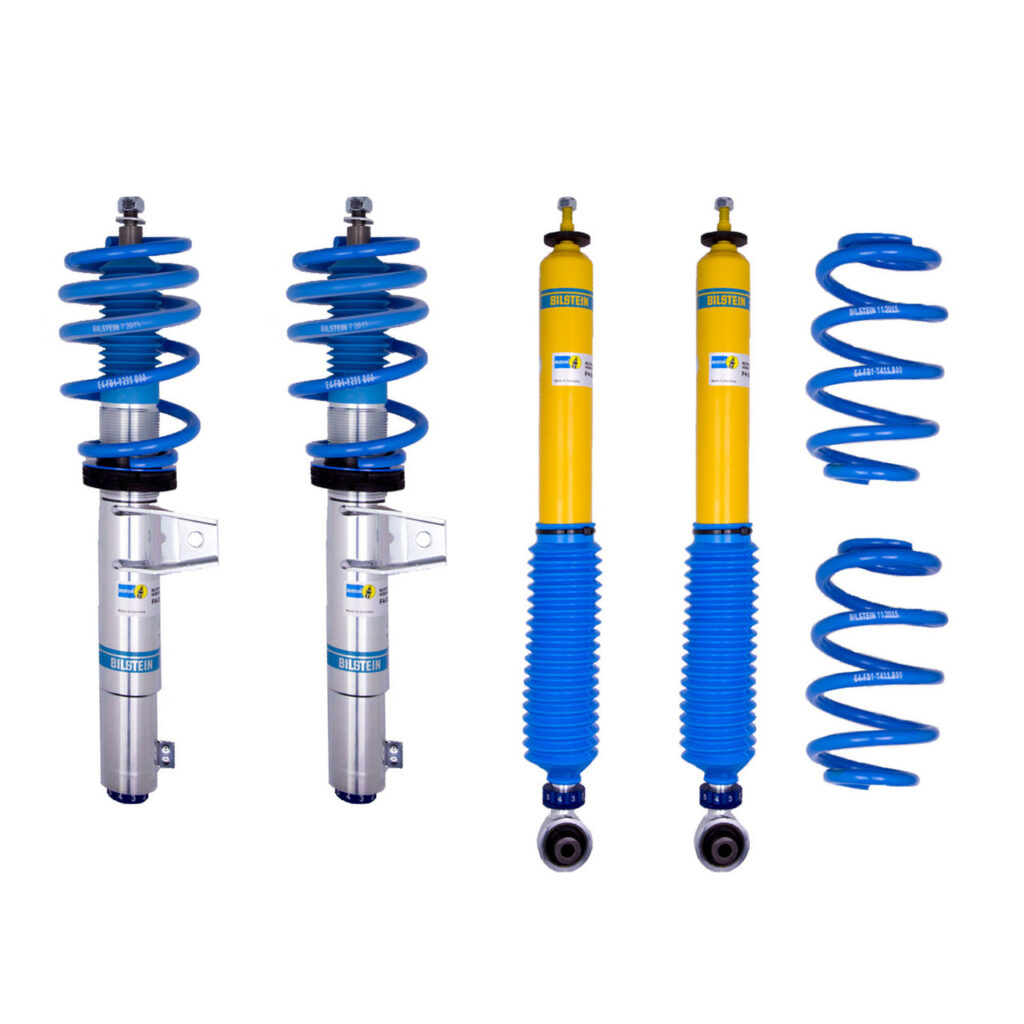
Coilovers use a spring and damper combined into one unit. Most aftermarket kits allow you to adjust ride height, and some also offer damping adjustment to fine-tune how firm or compliant the car feels.
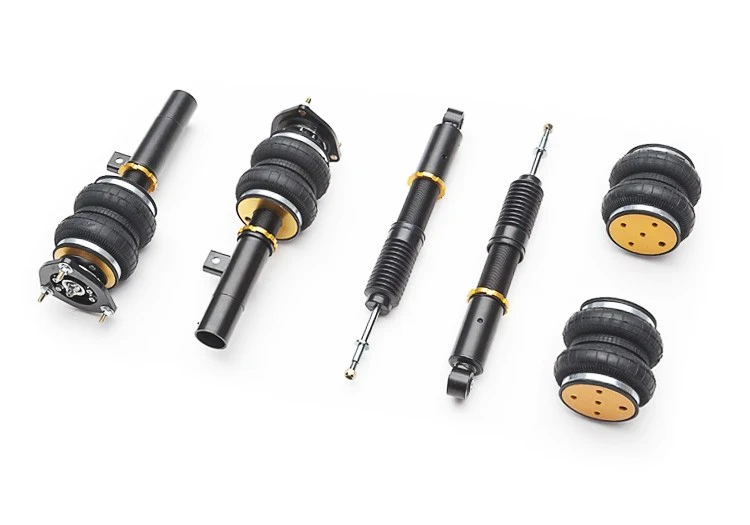
Air ride replaces conventional springs with air bags, supported by a compressor, tank and control system. Instead of setting one fixed height, you can raise or lower the car when needed.
That difference is what shapes the whole decision.
With coilovers, you choose a height and setup, then live with it. With air ride, you gain the flexibility to change the car’s height depending on the road, the occasion or the look you want.
Why People Choose Coilovers
Coilovers are usually the first choice for drivers who care most about handling and simplicity.
A good coilover setup can make the car feel tighter, more controlled and more responsive through corners. There is often less body roll, better composure under braking, and a more connected feel from the chassis. For drivers who enjoy spirited road driving, that more direct response is a big part of the appeal.
They also tend to be the simpler option mechanically. There is no air tank, compressor or management system to install, so the overall setup is more straightforward. That simplicity often makes coilovers more appealing to people who want a focused suspension upgrade without adding more complexity to the car.
Cost matters too. In most cases, coilovers are the more affordable route into a lowered, better-handling setup.
Why people choose Air Ride
Air ride appeals to people who want stance and usability at the same time.
The biggest advantage is flexibility. You can lower the car for appearance when parked, then raise it to deal with speed bumps, rough roads, steep driveways or awkward ramps. That can make a huge difference in day-to-day ownership, especially in the UK where road surfaces and access points are not always friendly to low cars.
For some owners, that adjustability is the entire point. They want the car to sit properly at a show or event, but they do not want the stress of scraping everywhere they go.
Modern air ride systems have come a long way as well. A well-installed, high-quality setup can offer very respectable road manners, good comfort and far more practicality than many people expect.
Which is better for handling?
If handling is the priority, coilovers usually come out on top.
That is not because air ride cannot perform well. Modern systems are much better than they used to be, and a quality setup can still drive very nicely. But coilovers are generally the more natural choice for people chasing a sharp, predictable, performance-led feel.
That matters most if you enjoy fast-road driving, want the car to feel more planted in corners, or simply prefer a setup that feels mechanically direct and consistent.
Air ride can still work well on the road, but it is usually chosen for versatility first and outright handling second.
Which Is Better for Daily Driving?
This is where the choice becomes more personal.
A properly chosen coilover kit can absolutely work on a daily-driven car. Plenty of people run them every day without issue. But daily usability depends heavily on how low the car is, how firm the kit is, and how realistic the setup is for the roads you actually use.
That is where air ride can make life easier. If your routes involve speed bumps, potholes, poor surfaces, steep entrances or car parks with awkward ramps, being able to lift the car when needed is a genuine advantage rather than a gimmick.
So while coilovers can still suit daily use, air ride often makes more sense for people who want a low car without constantly compromising practicality.
What About Comfort
Comfort depends less on whether you choose coilovers or air ride and more on the quality of the setup.
Cheap coilovers often get a bad reputation for being harsh, but that usually comes down to poor damper quality or setups chosen purely for ride height rather than real drivability. A well-made coilover kit, properly installed and adjusted, can feel controlled and surprisingly usable.
The same goes for air ride. A quality system with the right components and setup can feel refined and capable on the road. A poor one can feel disappointing, inconsistent or troublesome.
This is why price should never be the only deciding factor. Suspension affects how the whole car behaves, and a cheaper kit that looks good but drives badly usually ends up being a false economy.
Maintenance, Reliability and Ownership
This is one of the most important parts of the decision, and it is where buyers often think too little.
Coilovers are generally easier to live with. Once fitted, aligned and set up properly, they are relatively straightforward. Like any suspension part, they still need to be looked after, especially through poor weather and road grime, but the system itself is simpler.
Air ride involves more hardware. There are airlines, fittings, compressors, tanks and electronic management to consider. That does not automatically mean it will be unreliable, but it does mean installation quality matters even more.
A badly installed air ride system can create problems that have less to do with air ride as a concept and more to do with shortcuts, poor components or weak fitting standards. A good system, installed properly, is a very different ownership experience from a cheap setup fitted badly.
That is really the bigger lesson with either option: quality parts and proper installation matter far more than people sometimes realise.
Which Costs More?
In most cases, air ride is the more expensive choice.
That higher cost comes from the extra parts involved and the more complex installation. For many people, the extra spend is worth it because the adjustability makes the car easier to live with. For others, that added flexibility is not essential, and coilovers offer better value for what they actually want.
Coilovers usually make more sense when budget is a key factor and the goal is a fixed, performance-focused setup.
Air ride tends to make more sense when you are willing to spend more for versatility and convenience.
Which Setup Suits Your Type of Build?
This is often the easiest way to decide.
If the car is a fast-road build, a weekend toy or something you want to feel sharper and more focused behind the wheel, coilovers are usually the better match.
If the car is a show build, a stance-focused project or a daily that needs to stay practical while sitting low, air ride often makes more sense.
If the car is somewhere in the middle, the decision usually comes down to what you value more: driving feel or flexibility.
Common Mistakes People Make
A lot of disappointment comes from choosing the wrong suspension for the wrong reasons.
One of the biggest mistakes is choosing purely based on appearance. A car can look great on either setup, but that does not mean it will suit how you use it.
Another common mistake is buying the cheapest kit available. Suspension affects far more than ride height. It affects comfort, confidence, safety and how enjoyable the car is to drive. Going cheap often shows up later in poor ride quality, premature wear or unreliable performance.
It is also a mistake to ignore setup and alignment. Even the best parts can feel poor if they are not installed and adjusted properly.
And finally, some people expect one system to do everything perfectly. Coilovers are not the ideal answer for every low daily. Air ride is not automatically the best answer for every performance build. The goal is not to find the “best” suspension in general. It is to find the one that best fits your priorities.
So, Which Should You Choose?
Choose coilovers if you want a more connected, performance-led driving experience, a simpler suspension setup and a more cost-effective way to improve handling and stance.
Choose air ride if you want the freedom to run the car low without giving up usability, and if adjustability matters enough to justify the extra cost.
Neither option is wrong. The wrong choice is the one that does not match how the car is really used.
Final Thoughts
Coilovers and air ride both have clear strengths, but they solve different problems.
Coilovers are usually the better option for drivers who want sharper handling, less complexity and a more traditional performance setup. Air ride is usually the better option for owners who want stance without sacrificing practicality and flexibility.
The best decision comes from being honest about what matters most to you. Not what looks best on social media, but what will actually work for your car, your roads and your day-to-day use.
When suspension is chosen properly, the car does not just sit better. It feels better to own.
